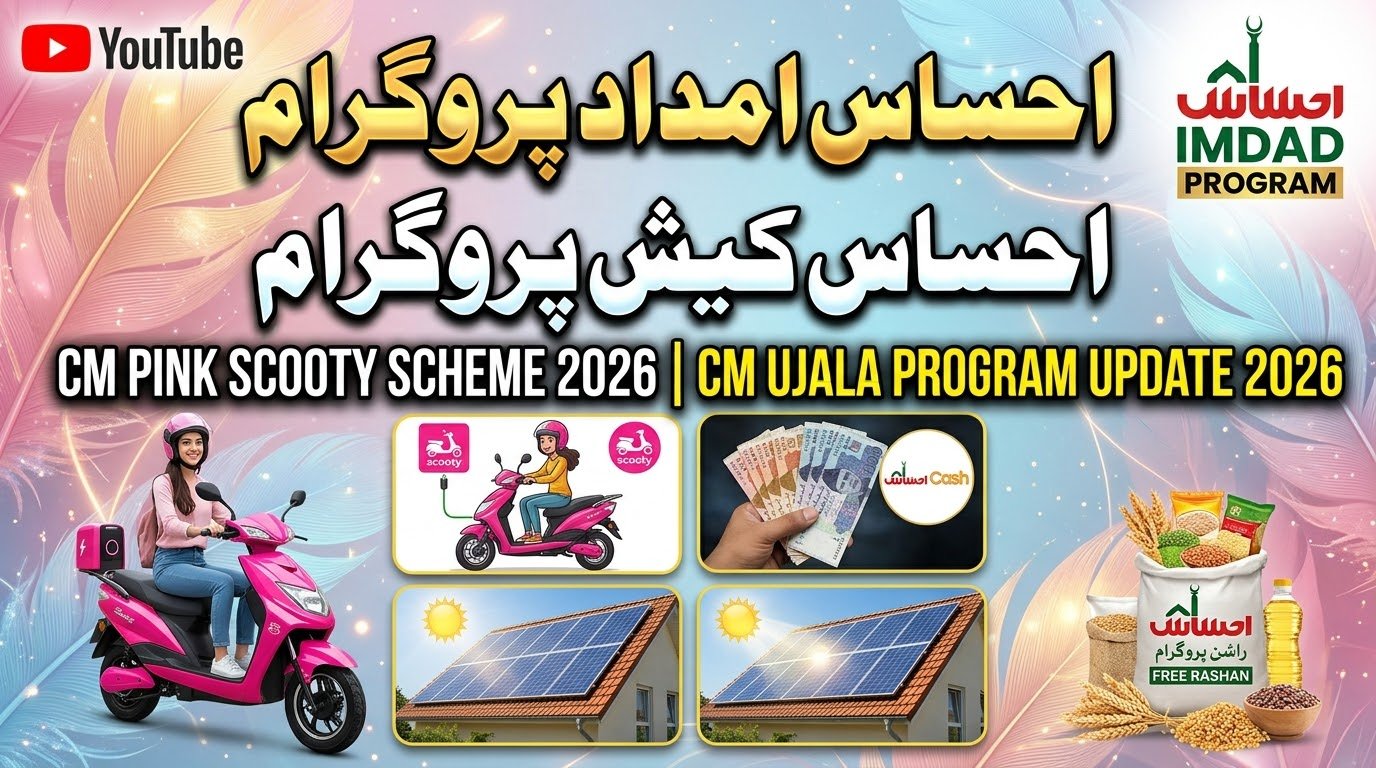
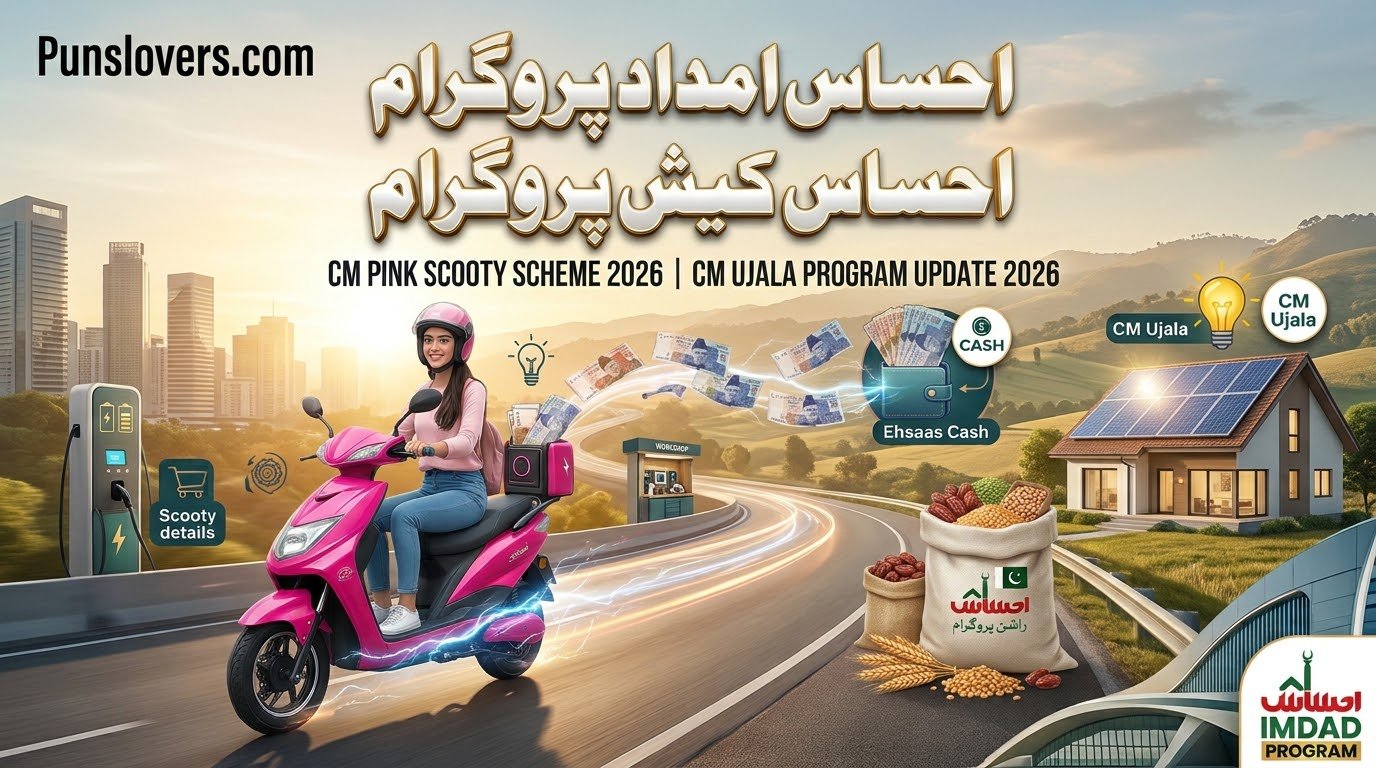
Ehsaas Cash Program, Ration Program, CM Pink Scooty Scheme And CM Ujala Free Solar Panel Program November 2026 Updates
Introduction
As November 2026 commences, millions of households throughout Punjab and the broader expanse of Pakistan are eagerly anticipating the most recent directives regarding state-sponsored welfare initiatives.
Currently, four major programs dominate the national discourse: the Ehsaas Cash Program, the Ration Program, the Chief Minister’s Pink Scooty Scheme, and the Chief Minister’s Ujala Free Solar Panel Program.Each initiative operates with distinct objectives, specific eligibility parameters, and unique disbursement mechanisms.
However, widespread confusion persists due to the proliferation of misinformation on social media platforms, where various accounts disseminate inaccurate figures and erroneous timelines.To address this ambiguity, this article provides a comprehensive, accessible exposition of all four programs in straightforward English, ensuring that the
November 2026 updates are comprehended clearly by every member of the general populace.This publication serves exclusively as an informational resource designed to facilitate your assessment of eligibility, illuminate procedural requirements, and safeguard against fraudulent schemes or unauthorized intermediaries.
Ehsaas Cash Program November 2026 Update
The Ehsaas Cash Program stands as a cornerstone of financial relief for impoverished and meritorious households across Pakistan, dedicated to alleviating the burdens of daily subsistence such as procuring food, settling electricity tariffs, covering educational fees, and acquiring essential medicines.
Currently operating under the Benazir Income Support Programme framework, the initiative continues its mandate as of November 2026.For the quarter spanning October through December, the government has allocated a standardized quarterly installment of fourteen thousand five hundred rupees to the majority of registered beneficiaries.
Nevertheless, the disbursement process is executed in phased intervals across various districts, ensuring that the distribution does not occur simultaneously nationwide.To mitigate congestion and ensure procedural efficiency, the distribution is executed incrementally on a district-by-district basis.
Throughout November, numerous households have already been notified by the 8171 helpline regarding their payment status.
The absence of such a message, however, does not necessarily indicate ineligibility; rather, it may simply signify that your specific district is scheduled for a subsequent phase of distribution.To ascertain your current standing, you should access the official 8171 portal and input your CNIC number alongside the unique code displayed on your screen.
Alternatively, you may transmit your CNIC via SMS to the 8171 short code.Both avenues of verification are entirely cost-free, and it is imperative that you refrain from disbursing any funds to intermediaries or agents who claim to facilitate this process.
Admission to the Ehsaas Cash Program is determined by the outcomes of the National Socio-Economic Registry (NSER) dynamic survey.
Priority is accorded to households characterized by low monthly incomes, including widows, divorced women, daily wage earners, persons with disabilities, and the elderly.A lower Poverty Mapping Tool (PMT) score significantly enhances the probability of selection.Individuals previously deemed ineligible may visit their nearest BISP tehsil office to undergo a survey update; such recalibrations frequently render applicants eligible, particularly when there has been a decline in household income or an expansion in family size.
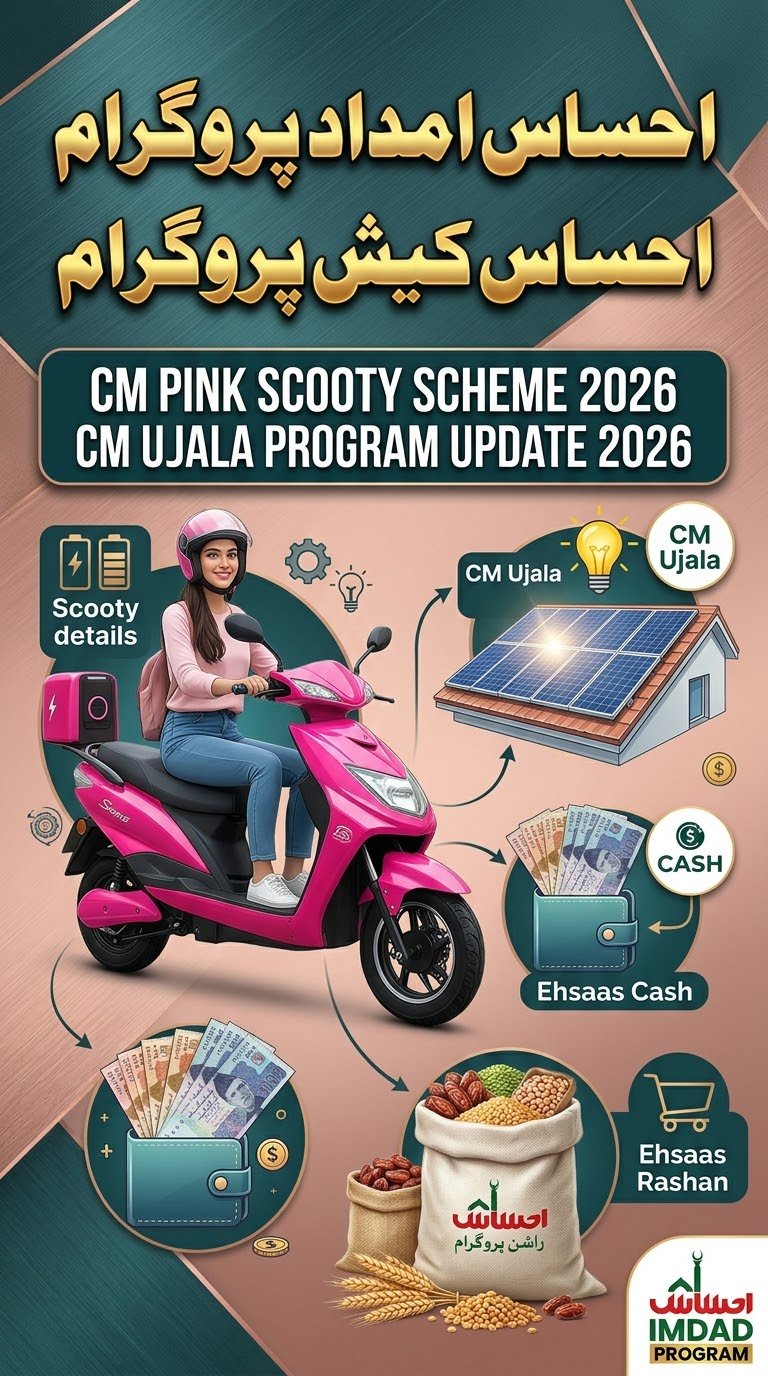
To initiate new registration for the program, applicants must present their original Computerized National Identity Card (CNIC) in person at the designated BISP tehsil office, as no online registration mechanism exists for this initiative.
Upon arrival, officials will administer a dynamic survey to collect comprehensive family details, which will subsequently be inputted into the central system; upon completion of this survey, an official confirmation message will be issued.
It is imperative to note that financial disbursement occurs exclusively following successful biometric verification, necessitating the presence of the original CNIC at the payment center.Should discrepancies arise regarding fingerprint data, applicants must return to the BISP office to pursue alternative verification protocols.
Furthermore, individuals must remain vigilant against fraudulent activity: no legitimate official will ever request an One-Time Password (OTP) or bank verification code via WhatsApp or telephone.Any attempt by an individual to solicit funds under the guise of registration must be reported to authorities immediately.
By November 2026, the government has further prioritized enhancing transparency to ensure that eligible individuals receive their full entitlements free from any deductions.
Ration Program November 2026 Update
The Ration Program stands as a pivotal relief initiative designed to support low-income households, particularly in light of the substantial price hikes experienced over recent years for essential commodities such as flour, ghee, oil, sugar, pulses, and rice.
These escalating costs have rendered the procurement of even basic foodstuffs an arduous challenge for impoverished families.To address this critical issue, the government launched the Ration Program, enabling eligible households to access subsidized food or free rations distributed on a monthly or quarterly basis.As of November 2026, this initiative remains operational across Punjab and numerous other regions.
The primary objective is to channel direct relief assistance specifically to households that are already enrolled within the Ehsaas or BISP registries.
Within the framework of the Ration Program, qualifying families are entitled to substantial discounts on essential commodities when purchasing from authorized utility outlets and designated retail establishments.
Concurrently, in select districts, the state administration has instituted the direct distribution of complimentary ration packs comprising flour, rice, ghee, sugar, and pulses.The specific composition and monetary value of these allocations fluctuate across different districts, contingent upon fiscal constraints and local supply chain dynamics.
In November, the efficacy of the distribution mechanism was notably enhanced through the integration of digital verification protocols.To retrieve their entitlements, beneficiaries are now required to present their Computerized National Identity Cards (CNIC) alongside a unique confirmation message received via an official telecommunications channel.
To ascertain your eligibility for the Ration Program, you must possess a valid CNIC and ensure that your family has been duly enrolled in the NSER survey.
Individuals already beneficiaries of the Ehsaas Cash initiative possess a substantial probability of qualifying for ration assistance as well; however, in specific jurisdictions, a distinct registration process is mandated at the utility store or the local government office.
Accordingly, you are advised to proceed to the nearest utility store and request that the staff verify your CNIC against their system.Should your name appear on the official roster, you will be entitled to receive your ration immediately.
Inquiries regarding the November schedule for the Ration Program have become widespread, yet the government has not yet designated a unified national date for distribution.
Mirroring the phased implementation of the cash assistance initiative, ration distribution proceeds in stages; consequently, commencement dates in major urban centers will precede those in smaller towns and rural villages by several days.To ensure timely access, residents must maintain consistent communication with their local utility stores and ensure their mobile devices remain active to receive official notifications promptly.
A critical imperative is the avoidance of fraudulent ration cards and deceptive communications.
Malicious actors frequently disseminate spurious notifications claiming that one’s ration allocation is ready, subsequently soliciting funds or demanding the disclosure of sensitive codes.
It is imperative to recognize that the government never requires monetary payment for ration entitlements; consequently, any such request must be met with non-response and the strict safeguarding of personal data.All ration collections must be conducted exclusively at authorized distribution points, with the mandatory acquisition of a receipt for verification.
Furthermore, in November 2026, the administration intends to broaden the scope of this initiative to ensure wider accessibility for eligible households.Those who have not yet submitted an application are urged to proceed immediately to their nearest administrative office to finalize the requisite survey.
CM Pink Scooty Scheme November 2026 Update
Launched by the Chief Minister of Punjab, the CM Pink Scooty Scheme represents a targeted initiative designed to empower women and female students by ensuring access to secure, convenient, and cost-effective transportation.
The primary objective is to facilitate independent mobility for women traveling to educational institutions, workplaces, and other essential destinations, thereby eliminating their reliance on others.Within Pakistan, women frequently encounter significant obstacles in public transit, including pervasive harassment, protracted waiting periods, and exorbitant fares.
This program constitutes a pivotal advancement toward granting women greater autonomy and self-assurance.By November 2026, the scheme had emerged as a prominent subject of discourse among students and professional women throughout Punjab.Within the framework of this initiative, the government is disbursing scooters to qualified women either through subsidized rates or via flexible installment plans.
During the inaugural phase, thousands of these vehicles are being allocated to female students and working women.Selection is conducted through a merit-based online application system wherein candidates must satisfy specific prerequisites.Eligibility mandates that applicants be female residents of Punjab possessing a valid Computerized.
National Identity Card (CNIC) or B-Form, and must currently be enrolled as a college or university student or employed.In certain instances, the possession of a valid driving license or learner’s permit is also a requisite.Furthermore, to ensure operational competency, the government is offering complimentary training for women who lack prior experience in operating a scooter.
As of November 2026, the application portal for the subsequent phase has been reopened, thereby providing an opportunity for numerous women who were unable to participate in the initial round to now submit their candidacies.
Concurrently, the government has declared that beneficiary distribution will be administered via a transparent balloting mechanism, ensuring that every eligible applicant is afforded an equitable probability of selection.The roster of chosen participants shall be publicly disseminated through the official portal, with subsequent notification to selected beneficiaries delivered via SMS and telephone calls.
To ensure accessibility for students operating under constrained financial means, the monthly installment for the scooter has been deliberately set at a modest rate; in certain instances, the government further reduces this burden through special subsidies.
Beyond the vehicle itself, the state provides complimentary safety equipment, including helmets and other protective gear.This initiative transcends the mere distribution of transportation, aiming instead to safeguard women while they navigate public roads.
Recipients of these scooters are, however, obligated to adhere strictly to traffic regulations and consistently wear their helmets.Prospective applicants for the CM Pink Scooty Scheme must prepare their National Identity Card (CNIC), academic credentials, domicile certificate, and driving license.
Applications are to be submitted exclusively via the official portal; applicants are strictly advised against remitting any funds to intermediaries who purport to secure inclusion on the beneficiary list, as selection is determined solely through a rigorous merit-based evaluation and balloting process.
Furthermore, throughout November, a series of awareness initiatives will be conducted across colleges and universities to instruct female students on the application procedures.Anticipated to transform the lives of thousands of women in Punjab, this initiative aims to grant them newfound autonomy and enhanced mobility.
CM Ujala Program Free Solar Panel November 2026 Update
The Chief Minister Ujala Program, alternatively designated as the Free Solar Panel Initiative, stands as a cornerstone of the Punjab government’s most widely acclaimed policies.
Exorbitant electricity expenditures have increasingly straining the financial resources of ordinary citizens, with summer utility bills for modest residences frequently escalating into the thousands of rupees.Alleviating this fiscal burden, the administration launched the.
CM Ujala Program to furnish eligible households with complimentary solar photovoltaic systems.As of November 2026, the scheme has advanced into a novel operational phase, prompting thousands of families to anticipate the imminent distribution and installation procedures.
Within the framework of this initiative, households demonstrating modest energy consumption are accorded precedence, with eligibility generally reserved for families utilizing between one hundred and two hundred kilowatt-hours per month.
To ascertain qualification, the government meticulously scrutinizes both the applicant’s electricity bill and their Computerized National Identity Card (CNIC).The distributed solar infrastructure typically comprises photovoltaic panels, an inverter, and, in certain configurations, battery storage.
This integrated system empowers families to operate essential devices—including fans, lighting, mobile charging stations, and other minor appliances—exclusively on solar power during daylight hours, thereby eliminating reliance on WAPDA-supplied electricity.Consequently, such adoption facilitates a substantial reduction in monthly electricity expenditures.
As of November 2026, the verification procedure for prospective applicants remains in progress.
Conversely, households that submitted applications in preceding months are currently being notified regarding their verification status and scheduled installation dates.To guarantee equitable allocation across all regions, the government has segmented the distribution effort into distinct phases, with deployments executed exclusively by official teams.
While selected families within the free eligibility category incur no installation fees, certain households utilizing a greater number of units may be required to settle their solar systems through manageable installment plans rather than receiving them entirely at no cost.
Prospective candidates must satisfy three prerequisites to participate in this initiative: they must be permanent residents of Punjab, possess a valid Computerized National Identity Card (CNIC), and hold an electricity bill registered either under their own name or that of a family member.
The application process is executed via the official portal, requiring the submission of the CNIC number, mobile contact, and the reference number found on the utility bill.Upon submission, the system automatically verifies the applicant’s records and notifies them regarding their eligibility status.Should an applicant be deemed eligible, they will receive an SMS containing the scheduled date for installation.

We are passionate about wordplay and spreading smiles through witty content. Backed by 5 years of experien . PunsLovers.com is your go-to hub for humor.