The smth meaning in text is simple, and it trips up a lot of readers at first. If a friend texts you, “Wanna do smth tonight?”, they are not using a secret code. They are just shortening a very common English word to save time and keystrokes.
In this guide, you will learn the full form of smth, how to say it, where it came from, and how to use it without sounding rude or unclear. You will also see plenty of real examples, tone tips, and a clear comparison with similar short forms like sth and smh.
By the end, you will know exactly when smth works well in a casual chat and when it is better to spell out the full word instead.
What Does SMTH Mean in Text?
SMTH means something. It is a shortened written form of the word something, made by keeping the main consonants and dropping most of the vowels. It is not an acronym made from the first letters of several words. It is a contraction style shortcut, much like srly for seriously or nvm for never mind.
People almost always write it in lowercase as smth in texts, chats, and social media comments. The lowercase form looks relaxed and casual, which matches the tone of most friendly messages. You may sometimes see SMTH in capital letters, but that is far less common and can look like shouting in a casual chat.
When you read smth out loud, you still say the full word something. Nobody pronounces it letter by letter in normal speech. It lives mainly in writing, especially on phones, where short forms save effort and keep the conversation moving fast.
At its core, smth does one job very well. It points to an unnamed thing, idea, plan, or situation without naming it yet. The rest of the sentence tells the reader what kind of something the writer has in mind.
SMTH Full Form and Pronunciation
The full form of smth is something. That one word covers a thing that is not named, an idea that is still vague, an activity that is not decided yet, or a feeling that is hard to pin down. Smth keeps that same meaning, only in a shorter package.
Pronunciation is easy because there is nothing new to learn. Say something, just as you always would. Smth is a spelling shortcut, not a new spoken word. This is why it feels natural to readers who already know the full word, and why it can confuse readers who have never seen the shortcut before.
For a trusted dictionary sense of the full word, Merriam-Webster defines something as a thing that is not known, named, or specified. That definition fits smth perfectly, because smth almost always stands in for a thing that is left unnamed on purpose.
If you are writing for a wide audience, remember that not everyone knows texting shortcuts. A first time reader may pause at smth, while a regular texter will read straight past it. That audience gap matters, and it is one reason to choose your setting carefully.
Where Did SMTH Come From?
Smth grew out of early internet chat rooms, forums, and SMS texting in the late 1990s and early 2000s. Back then, typing was slower, phone keypads were small, and many messages had strict character limits. Short forms were not just trendy. They were practical.
People shortened long, common words wherever they could. Something became smth, nothing became nthg in some chats, and seriously became srly. The goal was speed, and the shortcuts spread because everyone in those early online spaces understood them.
The first Urban Dictionary entry for smth dates to March 2004, where it was defined as an internet contraction for something. From there, it moved from forums into SMS, then into social media apps, group chats, and comment sections. Today, it is part of everyday casual digital English for many younger, mobile first users.
Its staying power comes from usefulness. Something is one of the most common words in English, so a short form for it gets used again and again. Unlike slang that fades in a season, smth solves a small, repeated problem, and that keeps it alive.
How to Use SMTH in a Text Message
Using smth is easy once you know its two basic rules. First, use it in place of something, in the same spot in the sentence where something would go. Second, keep it casual, because smth always carries a relaxed, informal tone.
Write it in lowercase in most chats. Lowercase smth blends into a friendly message, while capital SMTH can look formal or loud. Also, do not use smth on its own as a full sentence. It needs a sentence around it to make sense, because it stands in for a noun, not a complete thought.
Smth pairs very well with softening words like or, maybe, and I guess. Those words add a relaxed, low pressure feeling. For example, “We could watch a movie or smth” sounds like an open idea, not a firm plan. That softness is often the whole point.
Keep the rest of your sentence clear. Smth already adds vagueness, so a vague sentence around it can become confusing. If the plan matters, name the time, place, or activity, and let smth cover only the small unnamed part.
SMTH Example Texts for Everyday Chats
The best way to learn smth is to see it in real messages. Notice how it replaces something in each example, and how the tone stays light and casual throughout. These examples cover plans, food, feelings, questions, and everyday small talk.
- “Wanna do smth fun this weekend?” (Want to do something fun this weekend?)
- “I need smth to eat before we leave.” (I need something to eat before we leave.)
- “Let us grab smth cold on the way home.” (Let us grab something cold on the way home.)
- “I feel like smth is off today.” (I feel like something is off today.)
- “Smth tells me you stayed up too late again.” (Something tells me you stayed up too late again.)
- “We can watch a movie or smth later.” (We can watch a movie or something later.)
- “Did you eat smth, or are you still hungry?” (Did you eat something, or are you still hungry?)
- “I want to tell you smth important later.” (I want to tell you something important later.)
- “Maybe we should try smth new for dinner.” (Maybe we should try something new for dinner.)
- “Is smth wrong? You seem quiet today.” (Is something wrong? You seem quiet today.)
Notice a pattern in these examples. Smth often appears when the speaker has an idea but not a final detail. It invites the other person to fill in the blank, suggest an option, or simply keep the chat relaxed.
It also works at the start, middle, and end of a sentence. At the start, it can open a feeling, as in “Smth feels different today.” In the middle, it names an unnamed thing. At the end, after or, it softens a suggestion into a loose idea.
What Tone Does SMTH Send?
Tone is where smth gets interesting, because the same four letters can feel friendly, lazy, vague, or distant depending on context. In a chat with a close friend, smth usually feels warm, easy, and playful. It says, “I am relaxed with you, and this is not a big formal deal.”
In a low stakes plan, smth feels open and inviting. “Let us do smth this weekend” leaves room for ideas, and it takes pressure off the other person to agree to one fixed plan. That openness is why friends use it so much when brainstorming.
But smth can also sound noncommittal. “I will do it or smth” can read as, “I have not really decided, and I do not care much.” If the other person needed a clear answer, that vagueness can feel dismissive, even if you did not mean it that way.
The safest way to control tone is to match smth to the relationship and the stakes. With close friends and casual plans, it is perfect. With a serious topic, a firm promise, or a person who expects clarity, spell out something or name the thing directly. Tone follows clarity, and clarity builds trust.
SMTH on Social Media, Snapchat, Instagram and TikTok
On social media, smth shows up in captions, comments, replies, and direct messages. A caption like “Did smth fun today” is short, casual, and easy to read while scrolling. A comment like “We need smth like this” adds a quick reaction without a long explanation.
On Snapchat and Instagram, smth fits the fast, visual style of stories and direct messages. People type quickly, react quickly, and move on. Smth matches that pace. On TikTok, it often appears in on screen text and comments, where short words are easier to read in a few seconds.
It also works well in group chats, where several people are tossing ideas around at once. A short message like “Anyone up for smth tonight?” is easy to answer, and it invites replies without locking the group into one plan.
Still, social media is public in a way a private text is not. A stranger reading your comment may not know you or your tone. If your post needs to be understood by everyone, including older readers or people outside your circle, the full word something is the safer choice.
SMTH vs STH vs SMTG and Other Similar Short Forms
Smth is not the only short form for something, and the variants can confuse new readers. The table below compares the most common forms, so you can spot each one and choose the clearest option for your own messages.
| Short form | Full form | How common it is |
|---|---|---|
| smth | something | Most common in casual texting and social media |
| sth | something | Common, even shorter, often used in fast chats and notes |
| smtg | something | Less common, still understood by many regular texters |
| smthg | something | Rare, mostly seen in older chats |
| sumth | something | Very informal, phonetic spelling, least formal of all |
Among these, smth is the best default choice. It is short, widely recognized, and easy to read. Sth is shorter, but it can look clipped or unclear to a reader who is not used to it. Smtg and smthg are understandable, but they are less standard, so they add a small risk of confusion for no real gain.
Smth also sits in a larger family of texting shortcuts. Words like idk for I do not know, tbh for to be honest, and ngl for not gonna lie all serve the same purpose. They save time, signal a casual tone, and mark the writer as fluent in online chat style. If you enjoy learning these words, check out imy meaning in text for another short form that shows up in friendly messages every day.
One warning helps here. Do not stack too many shortcuts in one message. A sentence full of abbreviations can be hard to read, even for a regular texter. One or two short forms per message keeps the chat fast without turning it into a puzzle.
SMTH vs SMH: Do Not Mix Them Up
Smth and smh look alike, but they mean completely different things, and mixing them up can change your message in a funny or awkward way. Smth means something. Smh means shaking my head, and it expresses disbelief, disappointment, or mild frustration.
Compare these two messages. “I need smth to drink” means you need something to drink. “Smh, I forgot my drink again” means you are shaking your head at yourself for forgetting. Same letters in a different order, totally different message.
The mix up is common because both words are short, both start with s, and both appear in casual chats. A quick check before you send can save you from a confusing reply. If your sentence needs the word something, use smth. If you are reacting with disbelief, use smh.
There are a few other lookalikes worth knowing. Sth is a true variant of smth, as shown above. Smooth is a rare, unrelated reading of smth in a few niche contexts, but in everyday texting, readers will almost always read smth as something. Context is your best guide, and in most chats, something is the only reading that makes sense.
When to Use SMTH and When to Spell It Out
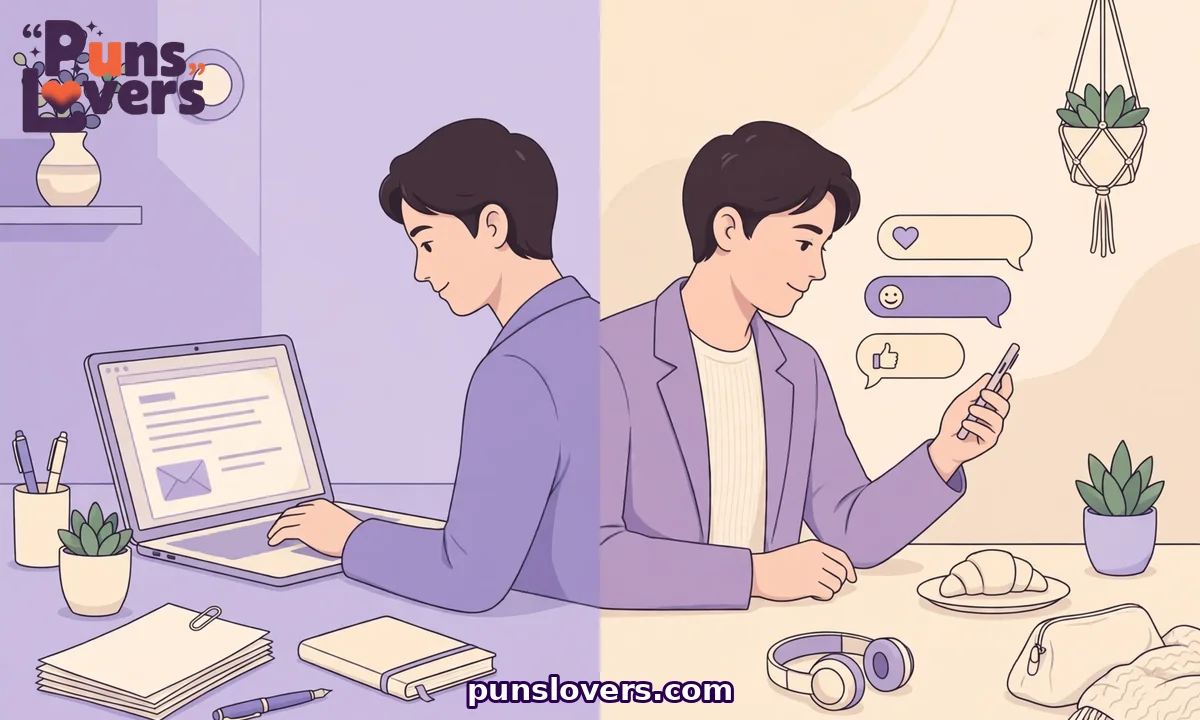
Smth shines in casual, private, low stakes writing. It fits texts with friends, family group chats, friendly direct messages, and light social media comments. In those settings, it saves time, sounds natural, and matches the relaxed tone of the conversation.
Spell out something in formal, professional, or high stakes writing. That includes work emails, job applications, school essays, official messages, and any message where clarity matters more than speed. In those settings, the full word looks careful, respectful, and clear.
| Situation | Best choice | Why it works |
|---|---|---|
| Text with a close friend | smth | Casual, fast, and friendly |
| Group chat plan | smth | Open and low pressure |
| Social media comment | smth | Short and easy to read while scrolling |
| Work email | something | Clear, professional, and respectful |
| School essay | something | Formal and correct for academic writing |
| Message to an older relative | something | Avoids confusion for readers new to slang |
Age and familiarity also matter. A reader who texts every day will likely know smth at once. A reader who rarely uses slang may need a second to work it out. When you are unsure about your reader, the full word costs you only a few extra letters, and it removes all doubt.
Finally, think about the feeling you want to leave. If you want to sound open, easy, and fun, smth helps. If you want to sound serious, sincere, or certain, spell it out and name the thing when you can. Good texting is not just about short words. It is about choosing the word that fits the moment.
How to Reply When Someone Texts You SMTH
Replies to smth are usually easy, because smth itself is often an invitation to respond with an idea. If a friend asks, “Wanna do smth tonight?”, you can answer with a suggestion, a question, or a simple yes with a follow up idea. The key is to match their casual energy while adding the detail that moves the plan forward.
- “Yes, let us grab dinner. What sounds good to you?”
- “Sure, I am free after six. Want to watch a movie?”
- “I was thinking the same thing. How about a walk and coffee?”
- “Haha, yes. I need smth fun after this long week too.”
- “What did you have in mind? I am open to ideas.”
If the smth message feels vague and you need clarity, it is fine to ask a kind follow up question. “Sounds good, what kind of thing were you thinking?” keeps the tone friendly while getting the detail you need. You do not have to guess, and you do not have to sound annoyed.
If someone uses smth in a serious message, respond to the feeling behind it, not just the shortcut. “Is smth wrong?” deserves a caring reply, not a grammar lesson. In that case, the word matters far less than the person sending it.
Over time, you will build a feel for smth without thinking about it. You will use it with friends, spell it out at work, and spot it at once in comments and chats. That fluency is the real payoff of learning a small word like this.
Frequently Asked Questions
What does smth mean in text?
Smth means something. It is a casual short form used in texts, chats, and social media to save time.
Is smth an acronym?
No, smth is not an acronym. It is a contraction style shortcut that keeps the main consonants of something and drops most vowels.
Should I write smth or SMTH?
Write smth in lowercase for most chats. Lowercase looks casual and friendly, while capital SMTH is rare and can look loud.
What is the difference between smth and sth?
Both mean something. Smth is more common and easier to read, while sth is shorter and often used in very fast chats.
What is the difference between smth and smh?
Smth means something, while smh means shaking my head. Smh expresses disbelief or disappointment, not an unnamed thing.
Can I use smth in a work email?
No, avoid smth in work emails and formal writing. Spell out something to sound clear, careful, and professional.
How do you reply to a text with smth?
Reply with an idea, a question, or a simple yes plus a suggestion. If the plan is vague, ask kindly what kind of thing they had in mind.
Conclusion
Smth is a small shortcut with a clear job, and now you know how to use it well. It means something, it sounds casual and friendly, and it works best in texts, group chats, and light social media messages where speed and ease matter most.
Keep it for close friends and casual plans, and spell out something when clarity, respect, or a formal tone matters more. With that simple rule, your messages will stay fast, friendly, and easy to understand for everyone who reads them.

We are passionate about wordplay and spreading smiles through witty content. Backed by 5 years of experien . PunsLovers.com is your go-to hub for humor.







1 thought on “SMTH Meaning in Text: What Does SMTH Mean and How to Use It?”